
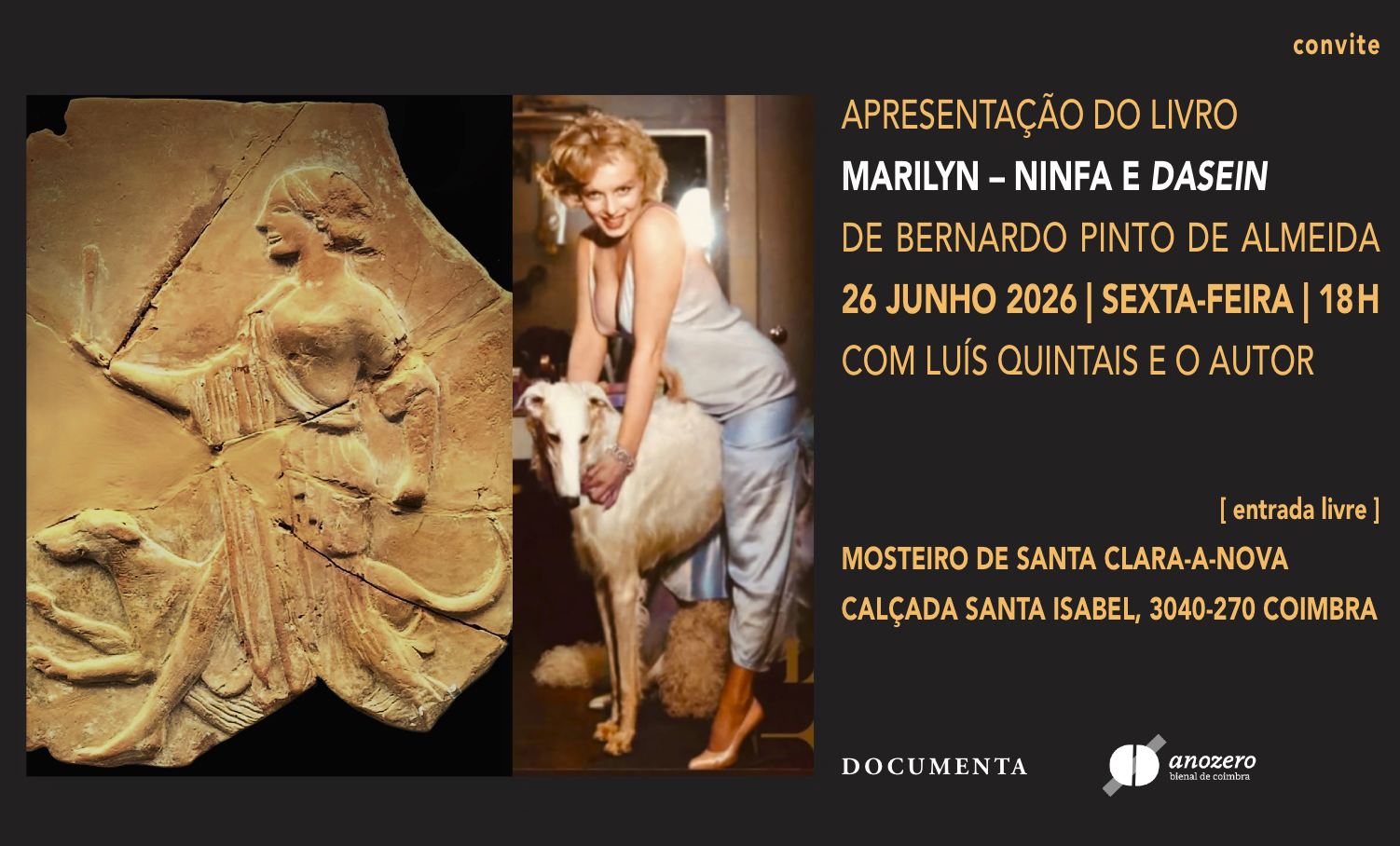
Apresentação do livro "MARILYN — Ninfa e Dasein", de Bernardo Pinto de Almeida
26 Jun
With Luis Quintais
Type: Book presentation
The Nymph, whose main function, as Warburg taught us, is to make visible the emblems of beauty, vitality, and erotic passion, was an unavoidable figure of Antiquity, both in literature (mythological, philosophical, and poetic) and in the arts, and survived, secretly incognito, for centuries. She reappeared in the Renaissance, figured again in arts and letters, associated with the rediscovery of Antiquity. Her reappearance in the 20th century would occur with cinema, since it was cinema that allowed her to be rethought and, above all, reviewed, in the form of the movement-image. The Nymph fulfilled, in the 20th century, what had been a design of Antiquity later rediscovered by the Renaissance and now updated: what Botticelli suggested was, thus, amplified by Hollywood. If I am right, we should try to understand how this figura - tion reappeared in our contemporary context, at least since Modernity until today, in order to trace its archaeology: to understand, in the luminous and enigmatic figure of Marilyn, an example of the Nymph's nachleben — and since nachleben (survival, posthumous image) does not mean repetition, but reinscription in a new context — in the contemporary era, is the purpose of this essay.
Location: Monastery of Santa Clara-a-Nova